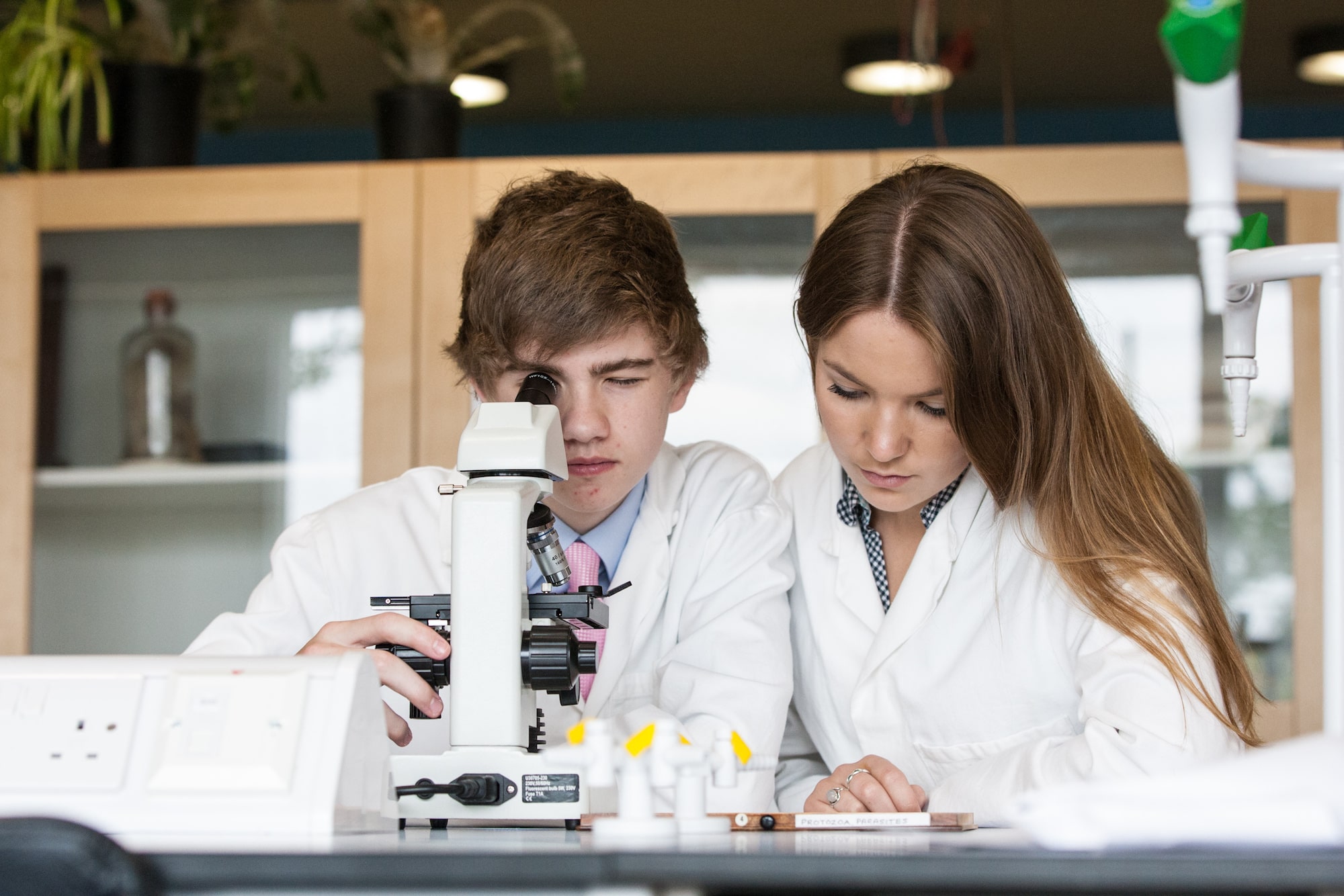
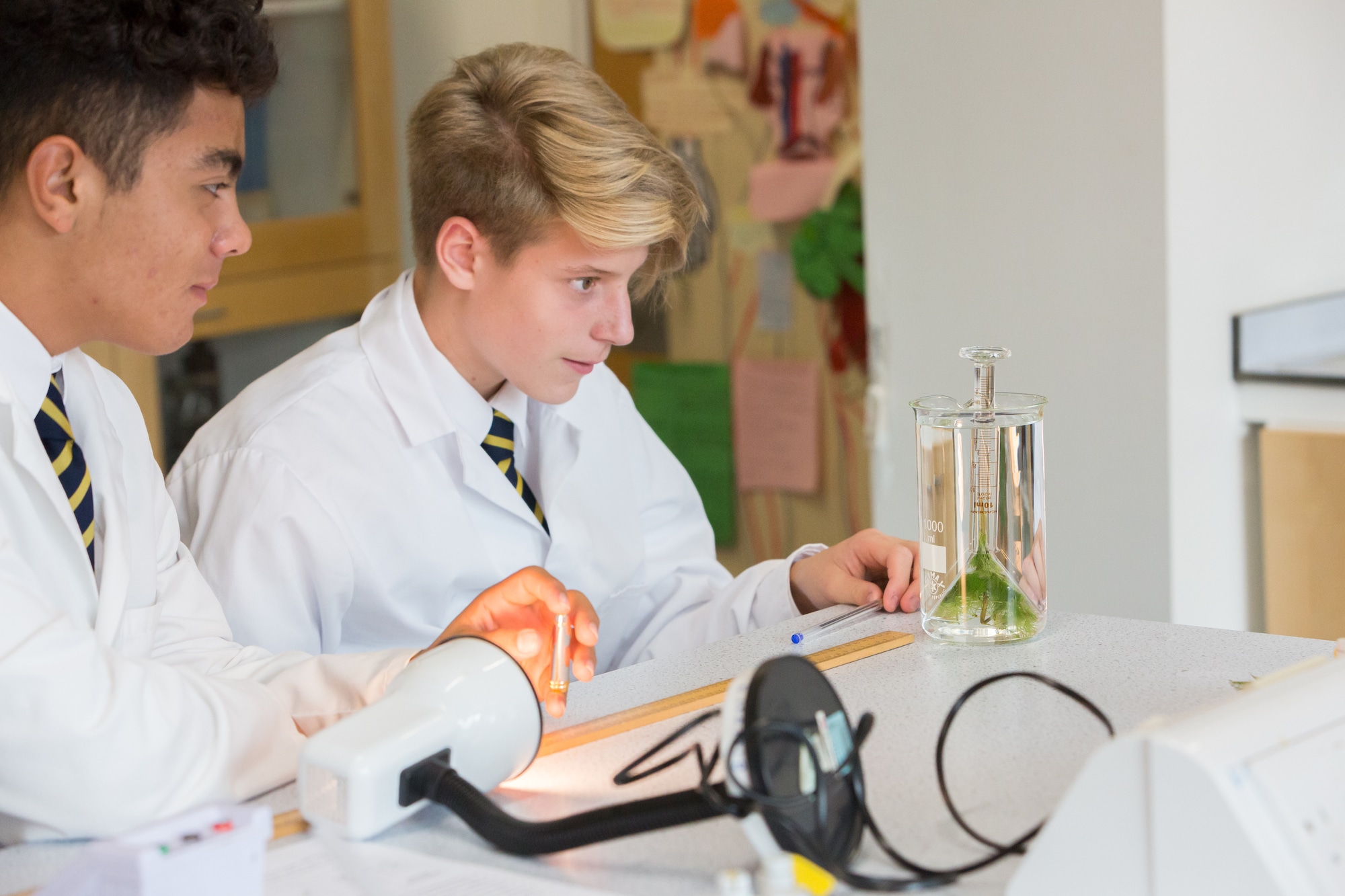
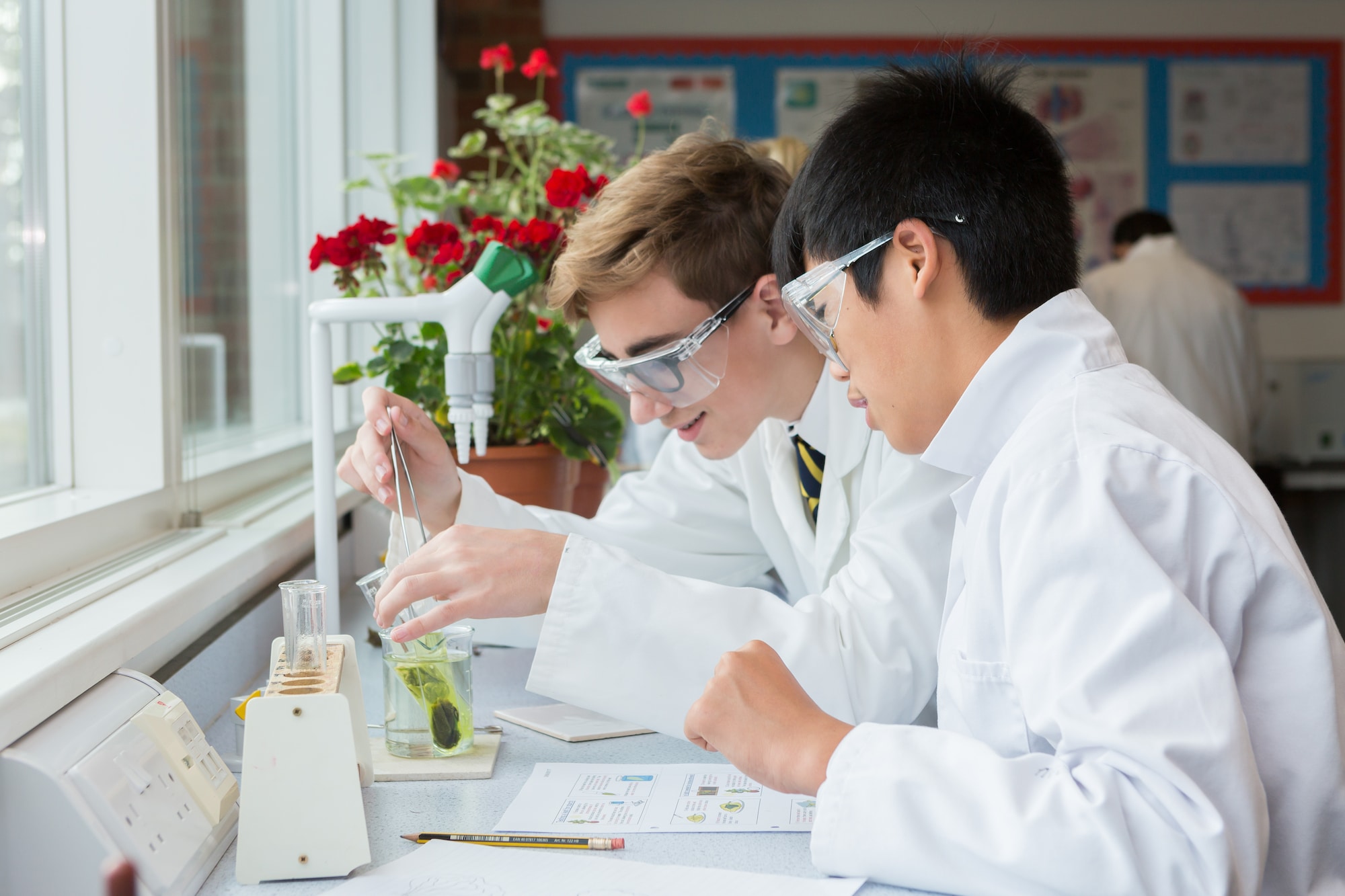
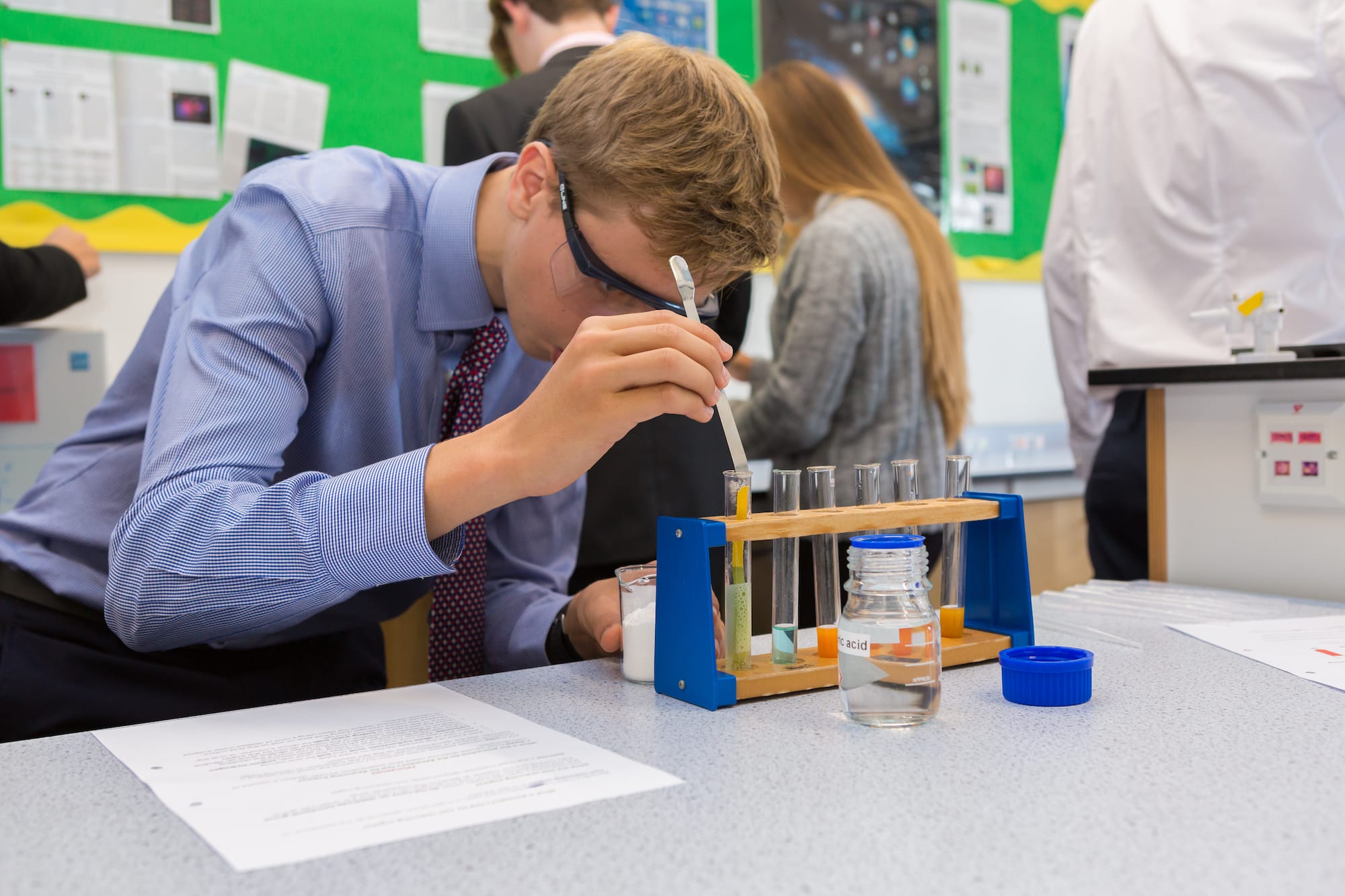
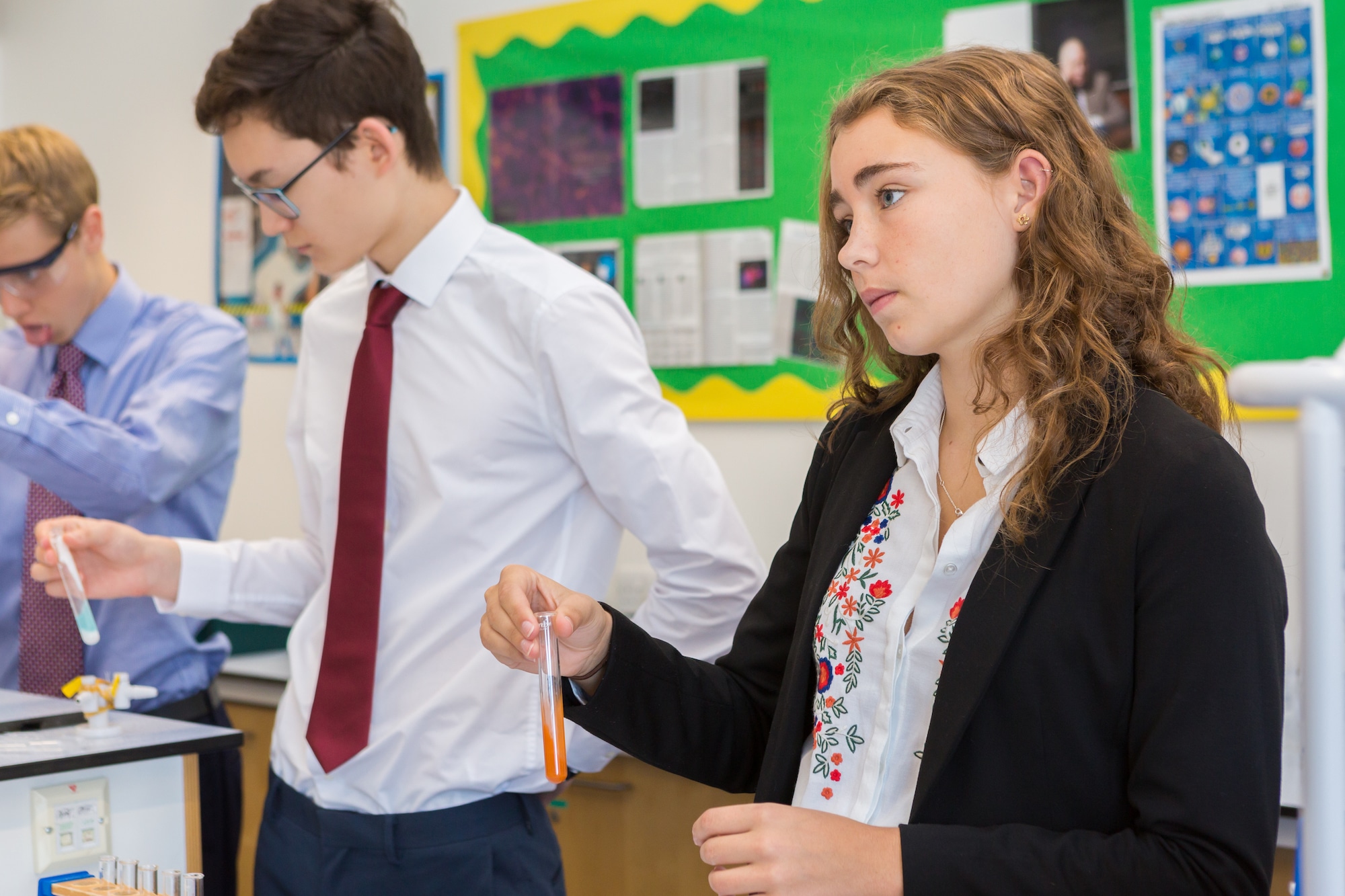
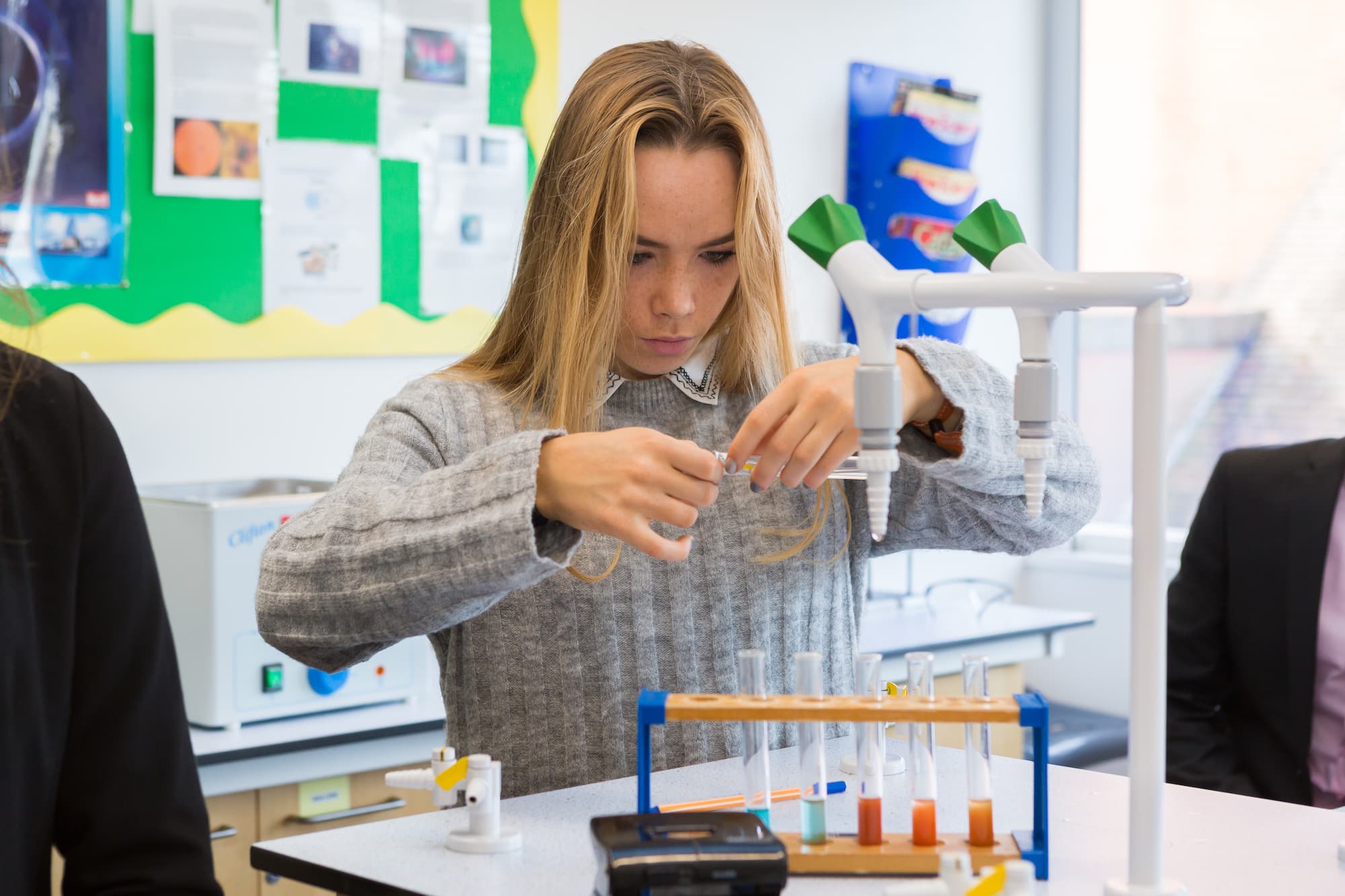
Residing in the fantastically well-equipped Emms building, the enthusiastic Biology staff seek to encourage an interest in this fundamental, exciting and ever-changing science.
Biology is the study of past, present and future life on Earth. Whether through pandemics, antibiotic resistance, the climate emergency or global food shortages, recent events have shown just how important it is for young people to have both an understanding of Biology and the ability to critically evaluate what they read in the news. It is indisputable that Biology affects all of us, and through exploring the relationships between cells, organisms and their environments, students gain a sense of perspective and appreciation for the world in which we live. The material is wide-ranging, with contemporary references to biotechnological advances making it highly relevant to our lives today
The Edexcel International GCSE Biology Course is taught over the three years of the Lower School and is examined over two papers at the end of the Upper Fifth year.
The course covers the following five subject areas:
- The nature and variety of living organisms
- Structures and functions in living organisms
- Reproduction and inheritance
- Ecology and the environment
- Use of biological resources
The IGCSE course provides an excellent foundation for those wishing to pursue A level study.
In the Lower Sixth, two units are further divided into four related topics:
- Biological Molecules
- Cells
- Organisms exchange substances with their environment
- Genetic information, variation and relationships between organisms.
Beginning with the principle that all life shares a common chemistry, we tackle the biochemistry of water, carbohydrates, proteins and lipids. The topic continues to explore the fundamental roles of nucleic acids and the universal nature of the genetic code. The second topic builds extensively on these foundations by considering the structure of cells. Bacteria and viruses are included here, as are the methods employed to study cells. Organisms are made up of systems of organs, themselves comprising groups of tissues made of cells and, as many organisms begin life as single cells, so cell division is covered next. The topic then moves on to consider cell recognition and the immune system, including vaccination. The third topic applies the principle of surface area to volume ratio to gaseous exchange and digestion in animals. The circulatory system is linked to both of these and it ties the section together. The final topic in the Lower Sixth course involves a more detailed examination of DNA and its contribution to the synthesis of proteins. The processes by which cells divide, whether for growth and repair or in the formation of gametes, is revisited to allow pupils to investigate sources of genetic variation, leading to a brief exploration of evolution, classification and biodiversity.
The second year of the A Level course is divided into four main areas of study, each of which builds on the Lower Sixth content:
- Energy transfers in and between organisms
- Organisms respond to changes in their internal and external environments
- Genetics, populations, evolution and ecosystems
- The control of gene expression.
The energy topic looks at continuous transfers of energy, starting with a detailed examination of photosynthesis, linking it to the formation of ATP in respiration and the passage of energy through ecosystems. The next topic contrasts the nervous and hormonal systems of internal communication, with a brief diversion to consider the control of plant growth. Mendelian Genetics and the study of population genetics provide a fascinating link to Darwin’s ideas. The formation of new species follows naturally and the course then examines the effects of biotic and abiotic factors on communities. The course closes with a consideration of how cells control their metabolic activities by regulating gene expression. Consideration of how the epigenome can be altered to control gene expression leads to a fascinating glimpse into the world of gene technology.
Practical work is closely integrated with the course material and students are expected to complete 12 required practical activities, which will enable them to develop and master a variety of practical and analytical techniques.
The A Level is awarded following three examinations. The first of these covers material from the Lower Sixth year, the second picks up on the Upper Sixth topics and the final paper is synoptic. Each examination lasts 2 hours
Trips and Events
Sixth Form Biologists enjoy a “Brains for Biologists” day, in which a visiting expert delivers a series of interactive lectures covering all aspects of neuroscience, from the most traditional anatomy and physiology to cutting-edge research. The day culminates in a sheep brain dissection. Last year the Upper Sixth visited Kew’s Wakehurst Place Seed Bank, the largest collection of wild seeds in the world and an amazing example of ex situ conservation.
In 2024 the department is took an overseas trip to study the native flora and fauna of the Florida Everglades (Easter 2024). The department plans to run a trip the rainforest in Honduras in Summer 2027.
Biology students enter the Biology Challenge (Years 9 and 10), the Intermediate Biology Olympiad (Lower Sixth) and the British Biology Olympiad (Upper Sixth).
Beyond School
An A Level in Biology leads to a number of related Undergraduate programmes. In recent years, for example, A Level Biologists have gone on to study Biological Sciences, Biochemistry, Biomedical Engineering, Biomedical Science, Chemistry, Environmental Geoscience, Human Biosciences, Marine Biology, Medicine, Microbiology, Natural Sciences, Neuroscience, Pharmacology, Physiological Science and Psychology.
An A Level in Biology also facilitates access to a range of unrelated degree options. Recent A Level Biologists have pursued undergraduate degree programmes in, for example, Advertising, Business, Economics, English, Drama, Geography, History and Politics, Marine Geography, Marketing, Maths and Sports Science, Politics and International Studies, Sociology and Sport and Exercise Science.
Head of Biology