

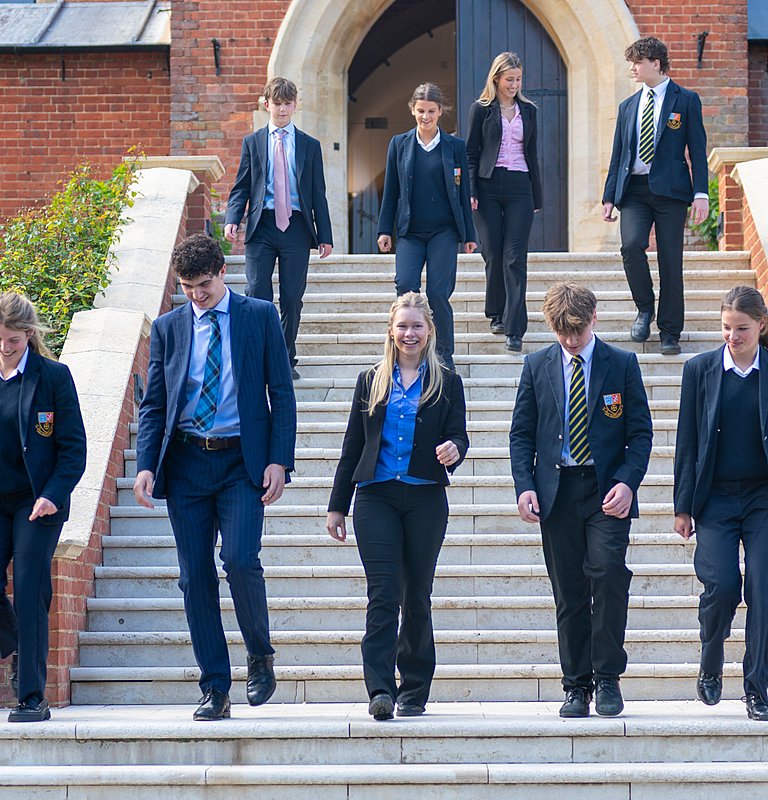
What is Cranleigh School?
Cranleigh is a co-educational independent day and boarding school for pupils aged 3 –18. Known for its academic rigour, excellent pastoral care and vibrant co-curricular programme, Cranleigh offers a warm and inclusive environment where pupils from around the world live, learn and grow together. International families are offered a bull boarding school experience in the UK with Cranleigh School. Pupils can join at key entry points including 11+, 13+, 14+ and 16+, progressing through Senior School before moving on to leading universities in the UK and internationally.
What are the UK boarding school entry points?
For the UK boarding school system, typical entry points are at 11+, 13+ and 16+. Further details have been provided below for each stage.
How do I apply to Cranleigh at 11+?
11+ entry means joining Cranleigh Prep in Year 7 (ages 11–12). Pupils typically progress to Cranleigh Senior School at 13+ (Year 9, ages 13–14).
The admissions process begins with registration and may include a review of school reports, age-appropriate assessments and an interview. We look for pupils who are ready to embrace the opportunities available at Cranleigh and contribute positively to school life. The Cranleigh International Admissions team will guide families through every stage of the process.
How do I apply to Cranleigh at 13+?
13+ entry means joining Cranleigh Senior School in Year 9 (ages 13–14), one of the most popular entry points for both UK and international pupils.
The admissions process may include registration, academic assessments, school reports and an interview. We take a holistic approach, considering academic potential, character, interests and readiness to thrive within the Cranleigh community. The International Admissions team supports families throughout the application journey.
How do I apply to Cranleigh at 16+?
16+ entry means joining Cranleigh Sixth Form in Year 12 (ages 16–17).
Applicants are typically assessed through a combination of previous academic performance, school reports, subject suitability for Sixth Form study and an interview. We look for pupils with the academic foundation, motivation and enthusiasm to succeed in A Level study and contribute to the wider life of the school.
How does Cranleigh assess international applicants?
How does Cranleigh assess international applicants?
Admissions decisions are based on a range of factors which may include academic assessments, school reports, interviews and, where appropriate, English language proficiency. We take a holistic approach, considering not only academic strengths but also a pupil’s character, interests and potential contribution to the Cranleigh community.
When should international families apply?
When should international families apply?
We encourage families to begin the admissions process as early as possible, ideally 12–18 months before their intended entry date. Availability can vary by year group and some entry points are more competitive than others, so early registration is recommended.
How do my child's qualifications map to UK year groups?
School systems vary around the world, so a pupil's age and current grade do not always align directly with a UK year group. The table below provides a guide to how international qualifications correspond with the UK system and helps families identify the most appropriate UK boarding school entry points at 11+, 13+ or 16+.
| International qualification | Country / system | Equivalent UK year | Cranleigh entry point |
| Brevet / Lycée Year 2 | France | Year 9 (age 13-14) | Senior - 13+ entry |
| IB Middle Years Programme Year 3 | International | Year 9 (age 13-14) | Senior - 13+ entry |
| Grade 7 (US System) | USA | Year 8 (age 12-13) | Senior - 13+ entry |
| Grade 8 (US System) | USA | Year 9 (age 13-14) | Senior - 13+ entry |
| Realschule Klasse 7 | Germany | Year 8 (age 12-13) | Senior - 13 + entry |
| 1° ESO | Spain | Year 7 (age 11-12) | Prep - 11+ entry |
| 中学 (Junior High) Year 1 | China | Year 7 (age 11-12) | Prep - 11+ entry |
What agents does Cranleigh work with?
Cranleigh works with a network of trusted international education partners who help families explore UK boarding education and identify the right school for their child. Families are also welcome to apply directly and work with the Cranleigh International Admissions team throughout the admissions process.
What UK school terminology should I know?
- House – A friendly and supportive boarding community where pupils live together, build friendships and receive pastoral support from dedicated House staff.
- Form / Year Group – The academic year a pupil is placed in, usually based on their age.
- Senior School – The stage of education for pupils aged 13–18 (Years 9–13), leading to GCSE qualifications.
- Sixth Form – The final two years of secondary education (Years 12–13, ages 16–18), when pupils usually study A Levels and prepare for university and future careers.
- Lower Sixth – Year 12, the first year of Sixth Form.
- Upper Sixth – Year 13, the second and final year of Sixth Form where pupils take their final exams.
- Exeat – A planned weekend when boarders may leave school to spend time with family or guardians. International boarders are welcome to remain at school, where a varied weekend programme of activities, trips and events ensures there is always plenty to enjoy.
Frequently Asked Questions About the UK School System
What's the school year?
The UK school year runs from September to July and is divided into three terms: Michaelmas Term (Autumn), Lent Term (Spring) and Summer Term. Throughout the year, pupils balance academic study with sport, creative activities, trips and House events.
What does Year 9 mean?
Year 9 is for pupils aged 13–14 and marks the beginning of Senior School at Cranleigh. It is a key entry point for many international pupils and provides a strong foundation for GCSE study.
What are GCSEs and A Levels?
Similarly to the iGCSEs, GCSEs (General Certificate of Secondary Education) are qualifications usually taken at age 16 at the end of Year 11. Pupils study a broad range of subjects before specialising in a smaller number of subjects at A Level.
A Levels are advanced qualifications studied during Sixth Form (Years 12–13). They are recognised by universities in the UK and around the world and help prepare pupils for higher education and future careers.
These qualifications are mapped against the UK boarding school academic curriculum.
What's a Sixth Form in the UK?
Sixth Form is the final stage of secondary education in the UK, for pupils aged 16–18 (Years 12 and 13). Students usually study A Levels or equivalent qualifications, enjoy greater independence and receive dedicated support as they prepare for university applications and life beyond school.
What's a House?
A House is the centre of a boarder's daily life. It is both a place to live and a close-knit community where pupils build friendships, receive pastoral support and develop a sense of belonging throughout their time at school.
Can my child join Cranleigh if they do not currently study the UK curriculum?
Yes. Many Cranleigh pupils join from international schools and education systems around the world. The Admissions team will help determine the most appropriate year group and guide families through the application process.
How is English language ability assessed?
International applicants may be asked to demonstrate that they have the English language skills needed to access the curriculum and participate fully in school life. The Admissions team will advise families on any English language assessment requirements relevant to their application.
What support is available for international pupils?
International pupils are supported both academically and pastorally as they settle into life at Cranleigh. House staff, tutors, teachers and the wider school community help pupils adjust to a new educational environment, make friends and feel at home from their first day.
Do international pupils need a guardian?
Most international boarders are required to have a UK-based guardian who can provide support when needed and act as a point of contact outside term time. The Admissions team can advise families on the school's current guardianship requirements.
Can Cranleigh sponsor a Child Student visa?
Yes. Cranleigh can support eligible international pupils requiring a Child Student visa to study in the UK. Families should contact the Admissions team for the latest guidance on visa requirements and application procedures.
What age do pupils take GCSEs and A Levels?
Pupils usually take GCSEs at age 16 (Year 11) and A Levels at age 18 (Year 13). These qualifications form the traditional academic pathway to universities in the UK and internationally.
Where do Cranleigh pupils go after Sixth Form?
Cranleigh pupils progress to leading universities in the UK and around the world. Through academic study, enrichment opportunities and personalised higher education guidance, the Sixth Form programme prepares students for success at university and beyond. Recent leavers have gone on to study a wide range of subjects at some of the UK's top Russell Group universities, including Oxford, Cambridge, Durham, Bristol, Edinburgh, Exeter, King's College London and Nottingham.
Interested in Cranleigh?
Whether you are exploring UK boarding education for the first time or are ready to apply, our International Admissions team is here to help. We can answer questions about entry requirements, year group placement, assessments, boarding life, guardianship and visas, and guide your family through every step of the admissions journey.