
Learning And Growth
Years 3-4 (Age 7-9)
Years 3-4 offers a joyful, hands-on start to learning that builds early confidence, curiosity and independence.
Prep Academic Lesson 3

What does active learning look like in Years 3–4?

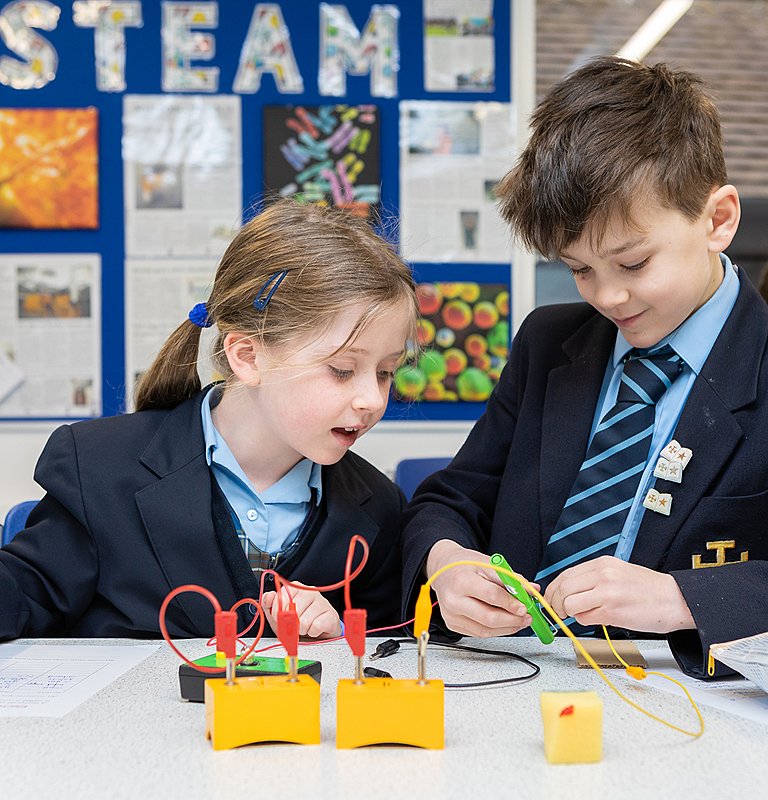
Cranleigh Years 3-4 learning is shaped around how 7-9 year olds learn best. Pupils engage through movement, discussion, investigation and practical tasks, helping them understand deeply and enjoy learning more. Lessons blend practical science, hands-on maths and creative activities, supported by strong foundations in literacy, numeracy and problem-solving. As pupils move through Years 3-4, specialist teaching becomes increasingly embedded in the Prep experience. 

Prep Computer Lesson

How does Cranleigh teach mixed-ability Years 3-4 classes?

Cranleigh’s mixed-ability teaching approach in Years 3-4 (ages 7-9) centres around building confidence and steady progress. Pupils who are ready for extra challenge are encouraged to think more deeply, while those who need additional support receive calm, focused guidance. Individual progress is closely monitored to ensure teaching is delivered at a pace that feels right for them.

What time does the Years 3-4 day start and finish?

The Years 3-4 day runs from 8am - 4.50pm, Monday to Friday. After school club and supervised prep are available until 5.45pm, providing flexible wraparound care for families. With late stays up to 5.45pm bookable in advance.

  • 7.30 - 8.00: Drop off
  • 8.00 - 8.10: Registration 
  • 8.10 - 8.30: Tutorial 
  • 8.35 - 10.20: Lessons 
  • 10.20 - 10.45: Break & Snack
  • 10.50 - 11.40: Games
  • 11.45 -  12.35: Lesson
  • 12.35 - 13.05: Lunch 
  • 13.05 - 13.35: Break
  • 13.35 - 13.50: Registration
  • 13.50 - 14.15: Tutorial
  • 14.20 - 16.50: Lessons 
  • 16.50: Day pupil collection time
  • 16.50 - 17.45: Wraparound care activities

What is SPARK at Cranleigh Prep?

SPARK is Cranleigh Prep’s enrichment programme, inviting curiosity, investigation, creativity and big-picture thinking – preparing pupils with skills for the modern world. It encourages pupils to ask questions, collaborate and present ideas confidently. Every SPARK activity at Cranleigh is rooted in our three core values - Aspire boldly, Be yourself, Look out for others - which aim to nurture ambition, individuality and empathy.

Find out more about SPARK

What engaging activities are part of SPARK?

SPARK in the early Prep years is a lively, hands‑on introduction to topics such as sustainability, charity, forest-skills and cultural awareness. It nurtures curiosity, teamwork and exploration, helping to build confidence, resilience and communication skills. SPARK activities include the following:

  • Financial literacy – learning about budgeting, making informed purchasing decisions, understanding value for money and managing charitable fundraising activities.
  • Communication Skills - using the senses to understand how we can communicate various emotions and understand empathy.
  • Charity - Designing wildlife cards for charity.
  • Global awareness - understanding different languages and cultures.
  • Forest School - Apple harvesting and outdoor skills.

What subjects do Years 3–4 pupils study?

In Key Stage 2, Cranleigh’s Years 3 and 4 learning focuses on developing strong foundations in literacy, numeracy and problem solving alongside creativity and communication. These skills are developed through a broad and engaging curriculum that includes:

  • English
  • Maths
  • Science
  • French 
  • Art
  • Music
  • Computing
  • Learning For Life (PSHE)
  • SPARK
  • Drama
  • Swimming (Y3&4 only)
  • Handwriting (Y3&4 only)
  • Guided Reading (Y3&4 only)
  • Mental Maths (Y3&4 only)
  • Dance (Y3-5 only)
  • Humanities (Y3-5 only)

What learning support is in place for pupils in Years 3–4?

Pastoral care and early, proactive learning support is woven into Years 3-4 classroom life at Cranleigh Prep. Pupils benefit from a blend of in-class support, small-group sessions and same-day intervention, ensuring help is available as soon as the need appears. The focus is on building organisation, independent learning habits and self-belief, with support designed to remove barriers without creating stigma. Strong partnerships with parents mean every child feels understood, encouraged and able to thrive.

Prep learning support Summer 2026
Prep Library Summer 2026

What is the Cranleigh Prep Library like?

The Prep library at Cranleigh is a welcoming space designed to inspire a strong love of reading. It offers a rich mix of fiction, non-fiction and enrichment texts that support both reading fluency and reading for pleasure. An accelerated reader programme and staff-led initiatives encourage pupils to discover new authors and develop a life-long enjoyment of books.

Frequently asked questions about Learning & Growth Years 3-4

When are pupils placed into sets?

Pupils are placed in sets for Maths in Year 3, with setting introduced in other subjects in Year 6 and again in Year 7 for additional subjects. Setting is introduced for science and French in Year 6. For Year 7, setting is introduced for English (which extends to History and Drama), extended setting from Science to Geography and Computing, and extended setting from French to Spanish and Latin. Cranleigh monitors individual progress to ensure teaching is always delivered at a pace that’s right for each pupil.

How much homework do you set?

By Year 3, pupils at Cranleigh Prep are typically given around 30 minutes of homework each night. The focus is on reading, gentle reinforcement of what they’ve learnt in lessons and building independent routines, gradually increasing at a pace that feels natural.

Do you teach languages in Years 3-4?

Yes, pupils learn French throughout Years 3-4 and begin Latin in Year 6, laying strong foundations for a lasting enjoyment of language.

Is there a residential trip?

Yes, Cranleigh Prep offers its first overnight residential trip in Year 3, with Year 4 doing a two night residential trip – a gentle, age-appropriate adventure that builds independence and friendships. You can find out more about school trips and tours by following the link below.

How do you communicate pupil progress?

We communicate pupil wellbeing and progress through termly reports, parents’ evenings and regular teacher-parent conversations.