

What life skills does Cranleigh teach beyond the classroom?
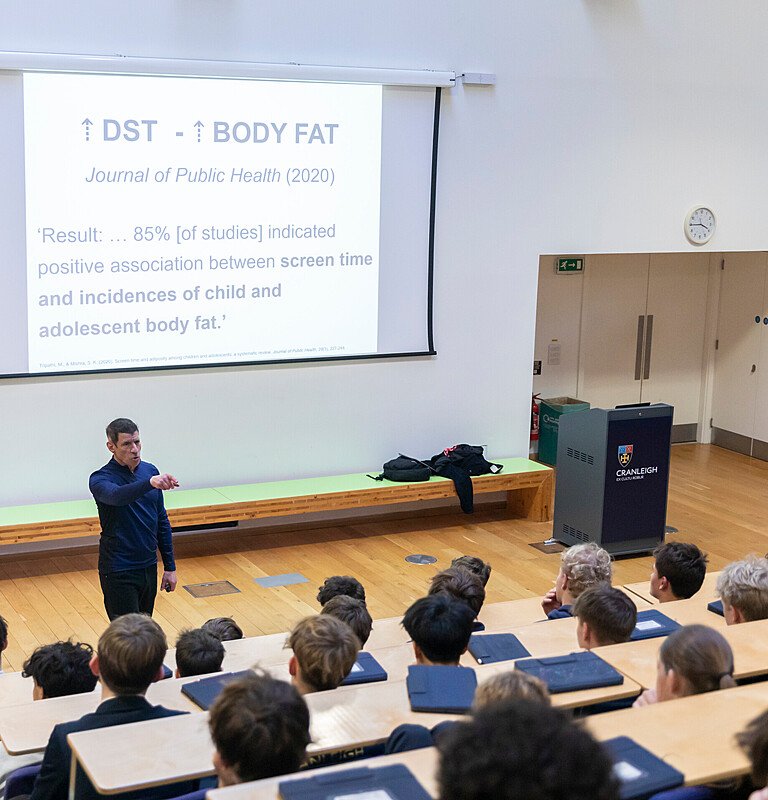
PSHE (Personal, Social, Health and Economic Education) at Cranleigh prepares pupils for life beyond the classroom. Alongside academic study, pupils learn practical decision-making, independence, digital citizenship, financial awareness and how to manage friendships, emotions and everyday challenges. Teaching is open, age-appropriate and grounded in real-world experience, with parents involved throughout. The skills pupils learn run through PSHE, tutor time, House life and Cranleigh Futures, helping them develop the confidence to navigate new situations and life events.
What is the Cranleigh PSHE curriculum?
Cranleigh PSHE follows seven key strands:
- Online safety
- Relationships, family and friends
- Physical health
- Wellbeing and mental health
- Sexual health
- Sexuality and gender
- Diversity and anti-racism
- Life skills
PSHE is closely integrated with Cranleigh Futures – the school’s future-ready programme – which plays a bigger role in the Sixth Form PSHE programme. Teaching is interactive, discussion-led and reflective in style, giving pupils space to explore ideas, ask questions and connect learning to real life.
Who leads on Pastoral?
Pastoral leadership is led by Andrea Saxel, Deputy Head, Pastoral – the senior leader accountable for wellbeing across the Senior School. She oversees PSHE, House systems and pastoral strategy, ensuring consistency, transparency and a joined-up approach to pupil support.
Frequently asked questions about PSHE
Is Relationships and Sex Education (RSE) taught?
Yes. RSE is taught in an open, age-appropriate way and in accordance with statutory guidance.
Can parents see the curriculum?
Yes. The curriculum is shared openly with parents, who are also kept informed through regular briefings and communications.
Who teaches PSHE?
PSHE is delivered by trained tutors and external specialists.
Are pupils consulted?
Yes. Pupil voice plays an important role in shaping PSHE content and ensuring it remains relevant to pupils' needs.
Is it assessed?
PSHE is not formally graded. The focus is on engagement, participation and reflection rather than academic assessment.